China Top Camping Tarp Manufacturers for Global Buyers
Choosing reliable China top Camping Tarp manufacturers requires more than comparing product photos and factory prices. Global buyers must examine material quality, production experience, communication, and supply consistency. A tarp may look strong on a screen, yet fail when wind pulls against weak stitching or poorly reinforced eyelets.
This guide introduces practical factors for evaluating Chinese manufacturers. It considers polyester and nylon fabrics, waterproof coatings, UV resistance, seam sealing, pack size, and color consistency. Buyers can also review factory audits, sample results, production records, and export experience. Clear specifications matter. A defined fabric weight, finished size, tolerance, and packaging method can prevent expensive misunderstandings.
Factory visits and independent inspections may provide stronger evidence than sales claims. Requesting a pre-production sample is useful. Testing it under rain, tension, and repeated folding can reveal small defects. Some manufacturers offer flexible customization, while others perform better with standard designs and stable volumes. Neither option is automatically superior.
No supplier is perfect. A polished catalog can hide weak after-sales support, and a low quote may exclude important testing or packaging costs. Buyers should compare complete offers and document every requirement. This article aims to help importers identify capable Camping Tarp manufacturers, ask sharper questions, and build more dependable purchasing decisions. The recommendations are practical, but they still require independent verification for each order.
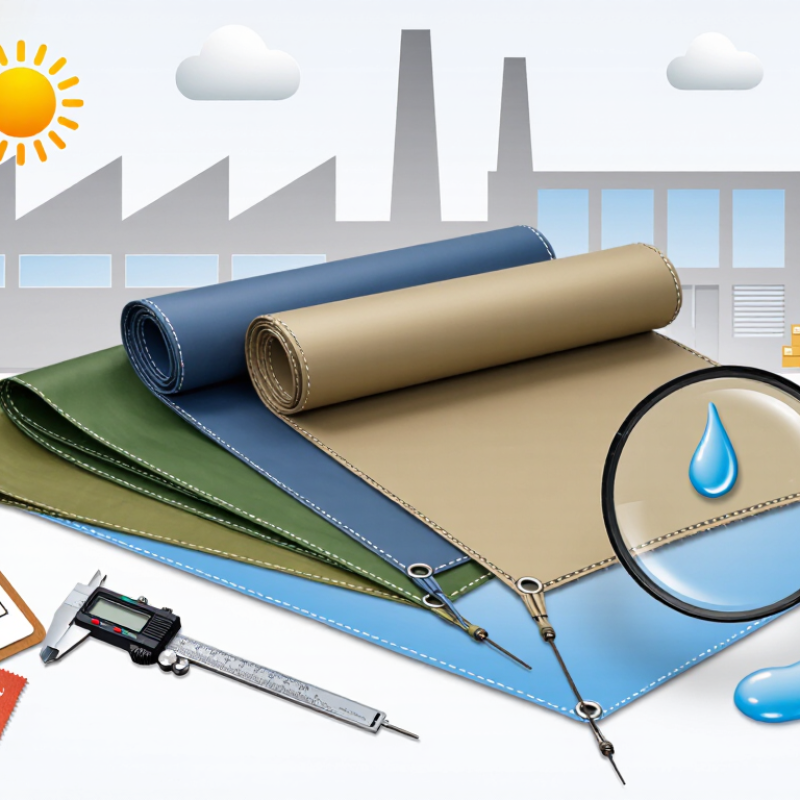
How to Evaluate China’s Camping Tarp Manufacturing Industry
Evaluating China’s camping tarp manufacturing industry requires more than comparing quoted prices. Fortune Business Insights valued the global camping equipment market at about USD 16 billion in 2023, with continued growth expected through 2030. This demand attracts many Chinese factories, but capacity varies sharply. Ask for factory photos, production records, and recent third-party test reports. Do not rely on catalog images alone.
Material control is the practical starting point. Request fabric specifications, coating weight, tear strength, hydrostatic pressure, and UV-resistance results. A reliable supplier should explain whether the tarp uses polyester, nylon, or recycled fabric, and identify coating thickness consistently. The ISO Survey reports millions of ISO 9001-certified sites worldwide, yet certification alone cannot prove product quality. Inspect the actual facility. Check cutting accuracy, seam sealing, eyelet reinforcement, and carton protection.
Sampling should copy real field use. Stretch the tarp over uneven ground, test tension points, and expose seams to repeated rain. Small defects often appear there. Ask for batch samples, not one specially prepared piece. Production lead time, minimum order quantity, replacement procedures, and inspection access also deserve written confirmation. Reports often make industry growth look smooth. Factory performance is not. A careful buyer should record weaknesses, because even experienced sourcing teams can overlook packaging damage or inconsistent coating during a short audit.
Key Product Types and Materials Used by Chinese Tarp Makers
Chinese tarp manufacturers serve global buyers with several practical product types. Common options include flat tarps, fitted covers, truck tarps, ground sheets, and agricultural covers. PE woven tarps remain popular because they are light, waterproof, and economical. PVC-coated polyester offers stronger tear resistance and better flexibility in demanding environments. Canvas provides a breathable surface, but it needs more care in wet storage.
Material choice affects service life. Grand View Research estimated the global tarpaulin market at about USD 8.6 billion in 2023, with steady growth expected through 2030. Its analysis links demand to construction, transport, agriculture, and outdoor protection. The report also highlights coated fabrics and synthetic fibers as important growth materials. However, thickness alone does not guarantee quality. A heavier tarp may still fail if the weave, coating, or heat-sealed seams are weak. That point is easy to overlook.
Tips: Ask suppliers for GSM, fabric density, coating weight, waterproof-pressure results, and UV testing details. Request samples before placing large orders. Check eyelet spacing, corner reinforcement, and folded-edge stitching. ASTM D751 and ISO 4892 test references can support more reliable comparisons. I would also inspect odor and surface tackiness, because low-cost coatings sometimes age poorly. Small defects matter. A clear inspection plan improves purchasing decisions, even when supplier documents look complete.
China Camping Tarp Manufacturers: Common Materials and Product Types
Typical commercial fabric-weight ranges used for camping and outdoor tarps
PE-woven tarps are lightweight and economical, while PVC-coated polyester provides higher abrasion resistance and heavier-duty weather protection. Canvas is breathable and suitable for traditional shelter applications, whereas TPU-coated polyester and silicone-coated nylon are commonly selected for lightweight outdoor and backpacking tarps. The ranges shown are typical specification bands and may vary by coating, weave, reinforcement, and finished-product design.
Leading Factors Behind China’s Top Camping Tarp Manufacturers
China Top Camping Tarp Manufacturers for Global Buyers
Leading Factors Behind China’s Top Camping Tarp Manufacturers
China’s leading camping tarp manufacturers combine dense textile supply chains with practical production experience. Grand View Research valued the global camping equipment market at about USD 16 billion in 2023. This growth increases demand for lighter, stronger, and weather-resistant tarps. Experienced factories often control coating, cutting, sewing, and final inspection in one location. That reduces handling time and helps buyers track defects more clearly.
Material selection remains a major advantage. Many manufacturers offer polyester, ripstop nylon, polyethylene, and coated fabrics for different climates. They test waterproof performance, seam strength, fabric weight, and ultraviolet resistance. However, test results can vary between laboratories. Buyers should request current reports, not recycled documents. UN Comtrade data under HS 6306 also shows China as a major global exporter of tents, tarpaulins, and related textile goods. This export scale supports flexible order quantities and competitive tooling costs, but low prices alone can hide weak stitching.
Tips: Ask for a physical sample before bulk production. Check corner reinforcement, grommet spacing, packed size, and coating consistency. Request inspection records linked to the exact production batch. Factory photos help, but they are not proof. A third-party inspection is wiser for large orders. One overlooked detail is repairability; field users may value replaceable guy lines more than a slightly lighter fabric.
Quality Control, Certifications, and Customization Options
China Top Camping Tarp Manufacturers for Global Buyers
Global buyers need more than attractive product photos when selecting Chinese camping tarp manufacturers. Quality begins with material traceability. Factories should record fabric rolls, coating batches, and inspection dates. For waterproof tarps, technicians commonly test hydrostatic pressure, tear strength, colorfastness, and seam performance. A sample may pass. Production can still drift. That gap deserves attention.
Reliable suppliers use incoming, in-process, and final inspections. Inspectors check dimensions, grommet placement, stitching density, edge reinforcement, and packed weight. Seam-taping machines require regular calibration. Manual checks remain useful. They catch wrinkles, weak corners, and uneven tension that instruments may overlook. Ask for inspection records, corrective-action reports, and retained samples from the same production lot. A factory audit is evidence, not proof.
Certifications should match destination markets and actual materials. ISO 9001 supports process consistency, while fabric testing may address waterproof performance, restricted substances, or fire requirements. Buyers should verify certificate scope, validity, issuing body, and product relevance. Customization can include dimensions, fabric weight, coating type, colors, tie-out points, packaging, and printed markings. Request a pre-production sample. Check it outdoors, not only under showroom lights. I would also confirm replacement procedures for defective units. This step feels slow. It often prevents expensive surprises.
How Global Buyers Can Select and Source the Right Manufacturer
China Top Camping Tarp Manufacturers for Global Buyers
How Global Buyers Can Select and Source the Right Manufacturer
Selecting a camping tarp manufacturer requires more than comparing factory prices. Check the fabric weight, waterproof rating, tear strength, and UV resistance. Ask for a physical sample, not only product photos. Inspect taped seams, reinforced corners, grommet spacing, and stitching quality. A perfect sample can still mislead. Request samples from the actual production line.
Factory verification should include production capacity, quality procedures, export experience, and material traceability. A video tour helps, but an independent audit offers stronger evidence. Ask how the factory handles fabric defects and late deliveries. Confirm minimum order quantities, packaging details, payment terms, and realistic lead times. Cheap pricing often hides weaker fabric or limited inspection.
Clear technical documents prevent costly misunderstandings. Provide drawings with dimensions, tolerance ranges, logo placement, folding methods, and carton requirements. Confirm whether recycled fabrics or special coatings require additional testing. Request inspection reports for color fastness, waterproof performance, and tensile strength when appropriate. Small details matter.
Trial orders are useful. They expose communication gaps before larger commitments. Keep written approval records for every revision. Some buyers overlook this step. That mistake can create uneven colors or incorrect accessories. A reliable supplier should answer precisely, admit limitations, and suggest workable adjustments instead of promising everything. Regular inspections remain worthwhile, even after several successful shipments.