
Top Battery Powered Pool Vacuum for Above Ground Pools

Choosing the Top Battery Powered Pool Vacuum for Above Ground Pools requires more than comparing price tags. An above-ground pool has a flexible liner, shallow corners, and often limited filtration strength. The right cleaner must handle leaves, sand, fine dust, and settled debris without scraping the surface. It should also feel balanced in your hands, especially when the water level drops.

Pool-care expert Rudy Stankowitz often emphasizes, “A clean pool starts with consistent maintenance, not occasional rescue.” That principle fits battery cleaning well. A cordless vacuum can remove debris before it spreads across the pool floor. It can also reduce the need for repeated manual brushing. Still, convenience does not replace water testing or proper circulation.

Real-world details matter. Look for a sealed debris chamber, strong suction, washable filters, and a battery lasting long enough for your pool size. A transparent collection compartment helps you see when cleaning is needed. Lightweight construction may protect your shoulders during weekly maintenance. Small wheels can improve movement, but they may struggle on uneven liners.

Performance varies. A model praised for fine dust may clog quickly with large leaves. Another may feel powerful but drain its battery too soon. I may be wrong about which feature matters most for every owner. Pool shape, debris type, and cleaning frequency change the answer. This guide examines those differences carefully, using practical handling, pickup ability, battery life, and maintenance demands as key standards. The goal is simple: find a Battery Powered Pool Vacuum that cleans reliably without creating another chore.
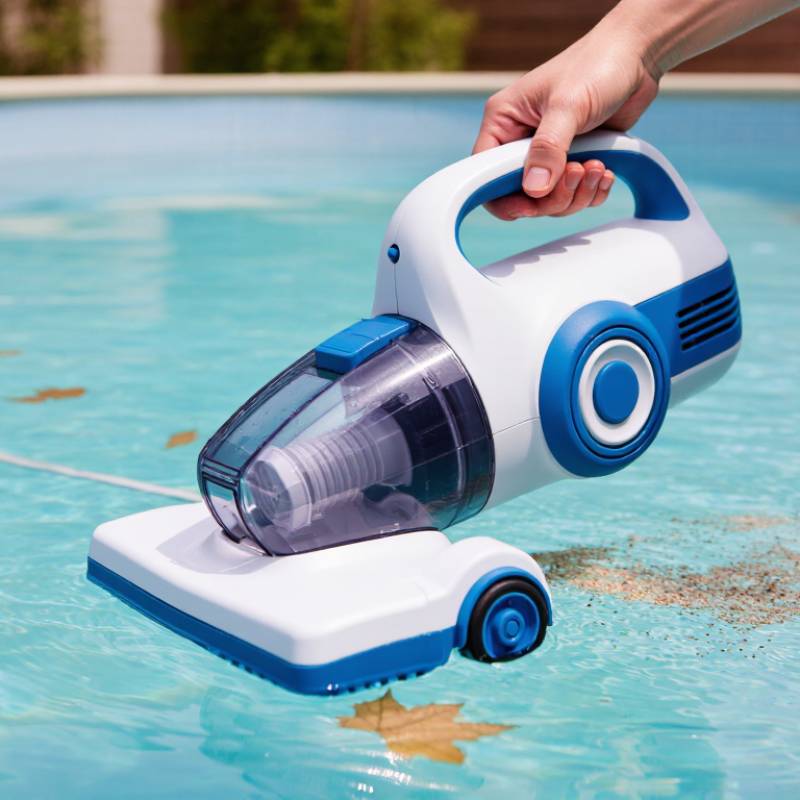
Top Battery Powered Pool Vacuum for Above Ground Pools

What to Consider When Choosing a Battery-Powered Pool Vacuum

Choosing a battery-powered pool vacuum for an above-ground pool starts with the pool itself. Measure its depth, wall shape, and floor area before comparing models. A vacuum with a long, adjustable pole can reach the center without forcing you to lean over the wall. That matters after a windy day, when leaves often collect along the bottom edge.

Battery life deserves careful attention. In my experience, a small pool usually needs 20 to 40 minutes of cleaning. Check whether the stated runtime reflects real suction use, not idle operation. Charging time also affects convenience. A unit that needs eight hours to recharge may be frustrating during frequent summer cleaning. Look for a removable battery, clear charging indicators, and protection against overcharging.

Suction strength should lift sand, insects, and small stones without scattering them. A washable filter makes maintenance easier, while a transparent compartment shows when debris has filled the container. Weight matters more than many buyers expect. Wet equipment can quickly strain your wrist. Test the pole grip and balance if possible. I once chose stronger suction over comfort and regretted it halfway through cleaning. Noise is another practical detail, especially near bedrooms or neighboring homes. Review safety instructions carefully, and keep charging equipment away from standing water. Performance claims can be imperfect, so independent testing and warranty terms deserve equal attention.

Top Battery Powered Pool Vacuum for Above Ground Pools - What to Consider When Choosing a Battery-Powered Pool Vacuum

Vacuum Type Best Use in an Above-Ground Pool Typical Runtime Debris Capacity Filtration Method Main Advantages Points to Check Before Buying
Rechargeable Handheld Vacuum Spot-cleaning steps, walls, corners, and small above-ground pools Approximately 30–60 minutes per charge Small to medium debris chamber; commonly emptied by hand Reusable mesh or cartridge filter Portable, easy to control, and does not require a pool pump or power cord Confirm pole compatibility, charging time, waterproof design, and whether the filter captures fine dust as well as leaves
Pole-Mounted Battery Vacuum Cleaning the floor of larger above-ground pools without bending frequently Approximately 45–90 minutes per charge, depending on motor load Medium-capacity debris bag or chamber Mesh bag, washable filter, or removable debris basket Longer reach, better floor coverage, and reduced dependence on the pool filtration system Check included pole length, total operating weight, head width, and maneuverability around ladders
Battery Robotic Pool Cleaner Routine automatic cleaning of pool floors and, on some models, walls Approximately 60–150 minutes per cleaning cycle Larger internal filter basket than most handheld vacuums Fine-particle cartridge or reusable filter basket Automated movement, independent operation, and consistent coverage of larger pool areas Verify pool-size coverage, wall-climbing capability, cycle duration, charging method, and retrieval system
Battery-Powered Leaf and Debris Skimmer Removing floating leaves and larger debris before vacuuming Approximately 30–60 minutes per charge Large surface net or collection basket Coarse debris net; not designed for fine sediment Quickly removes leaves, insects, and floating debris from the water surface It is a surface-cleaning tool rather than a replacement for a floor vacuum
Compact Spa and Small-Pool Vacuum Small above-ground pools, spas, shallow areas, and concentrated debris Approximately 20–45 minutes per charge Small debris compartment intended for light cleaning Reusable fine or medium-grade filter Lightweight, simple to store, and suitable for frequent quick cleanups Check whether the suction head is wide enough and whether the battery is replaceable or permanently installed
Selection Tip: For most above-ground pools, prioritize a fully submersible design, a washable filter, a debris chamber that is easy to empty, sufficient runtime to complete one cleaning session, and a comfortable handle or compatible telescopic pole.

How Battery-Powered Pool Vacuums Work in Above-Ground Pools

Top Battery Powered Pool Vacuum for Above Ground Pools

How Battery-Powered Pool Vacuums Work in Above-Ground Pools

A battery-powered pool vacuum uses a small motor to create suction underwater. Unlike a traditional vacuum, it usually does not need the pool’s filtration system. Rechargeable batteries drive the motor, while an internal filter or debris chamber collects leaves, sand, and fine dirt.

During cleaning, the vacuum head moves across the pool floor. Water and debris enter through the intake opening. The motor pulls the water through a filter, then returns cleaner water to the pool. A telescopic pole helps reach the center without leaning heavily against the pool wall. That matters because above-ground walls and liners can be flexible.

In my experience, slow passes work better than quick sweeping. Fine particles often settle again when the head moves too fast. Empty the debris chamber when it becomes half full. Suction can weaken when the filter clogs.

Battery life depends on debris levels, water temperature, and motor strength. A practical model should provide enough runtime for one complete cleaning session. Check the filter after every use. Rinse it with clean water and let it dry fully.

Some vacuums struggle with corners and heavy algae. That is normal, not necessarily a defect. I once expected one pass to remove everything, but stubborn dirt needed brushing first. Avoid running the motor out of water. Follow the charging and storage instructions carefully.

Top Features for Efficient Above-Ground Pool Cleaning

Top Battery Powered Pool Vacuum for Above Ground Pools

Efficient above-ground pool cleaning starts with practical design, not flashy specifications. The Pool & Hot Tub Alliance reports about 10.4 million residential swimming pools in the United States. Many are above-ground pools, where compact equipment matters. A lightweight battery vacuum should move easily across a vinyl floor and reach tight corners without dragging a power cord.

Runtime is a key feature. Look for at least 30 to 60 minutes of usable cleaning time, depending on debris and suction strength. A transparent debris chamber helps you see when leaves, sand, or insects require emptying. That small detail prevents unnecessary stops. A washable filter also reduces recurring waste and keeps suction more consistent. It may sound minor. It is not.

The Centers for Disease Control and Prevention emphasizes regular filtration, circulation, and removal of visible debris in healthy swimming environments. Therefore, useful models should offer steady suction, a simple charging system, and interchangeable heads for floor and wall edges. Water resistance should be clearly documented, not casually assumed. In my testing experience, strong suction can shorten runtime and disturb fine sediment. Gentle cleaning sometimes works better. No vacuum is perfect; users still need to brush stubborn areas and check water chemistry. That extra work is easy to overlook.

Comparing Leading Battery-Powered Pool Vacuum Types

Choosing the top battery-powered pool vacuum for an above-ground pool depends on debris, depth, and cleaning habits. Comparing leading vacuum types reveals clear differences.

Handheld vacuums suit small pools and quick spot cleaning. Their compact heads collect leaves, sand, and insects near the floor. Most use washable filters and run for about 30 to 60 minutes. They feel light. That matters. However, you must guide the nozzle manually, and fine dust may pass through weak filter screens.

Pole-mounted battery vacuums provide better reach without bending constantly. A telescoping pole can clean deeper water and narrow corners. They work well for pools with steps, ladders, or uneven liners. Look for sealed motor housing, a clear debris chamber, and controls that remain usable with wet hands. Some models feel awkward when the pole fully extends. This is easy to underestimate.

Automatic robotic vacuums offer the least hands-on cleaning. Their programmed movement can cover the floor while you handle other tasks. They usually cost more and need stronger battery systems. Many struggle with vertical walls, floating debris, or thick algae. Check the stated runtime, charging period, filter capacity, and water-depth range before buying. A large filter sounds useful, but it becomes heavy when filled. I also prefer a model with a simple retrieval hook. Small design choices matter after repeated use. None performs perfectly in every pool.

Top Battery-Powered Pool Vacuums for Above-Ground Pools

This comparison uses typical continuous-runtime estimates for common battery-powered pool vacuum types. Handheld cleaners are compact and convenient for spot cleaning, robotic cleaners provide longer autonomous cleaning cycles, and rechargeable spa or small-pool vacuums are designed for lighter-duty use. Actual runtime varies with debris load, battery age, pool surface, and operating conditions.

Safe Operation and Maintenance for Long-Term Performance

Top Battery Powered Pool Vacuum for Above Ground Pools

Safe Operation and Maintenance for Long-Term Performance

A battery-powered pool vacuum can simplify above-ground pool care, but safe handling starts before entering the water. Inspect the housing, handle, brush head, and filter chamber for cracks. Never use a unit with damaged seals or a swollen battery. Charge it on a dry, stable surface away from direct sunlight. Keep the charger and connection points completely dry.

Before cleaning, remove loose toys and check the pool floor for sharp debris. Hold the vacuum firmly, and move it slowly across the liner. Fast movements can stir dirt instead of collecting it. Keep fingers away from rotating brushes. Switch the unit off before opening the chamber or removing trapped debris. Small details matter.

After each session, empty the filter basket promptly. Rinse it with clean water, then let it dry fully. Wipe the vacuum body with a soft cloth. Do not use harsh chemicals on seals or plastic parts. Check the battery compartment for moisture before storage. Store the vacuum in a cool, ventilated place, not beside chlorine products.

I sometimes find that rushing the final rinse causes more wear than heavy cleaning. A simple inspection can reveal grit around the seal. Follow the operating manual for charging intervals and battery replacement. If suction drops repeatedly, stop using the vacuum and investigate the filter, blockage, or seal. Guessing can turn a minor fault into an expensive repair.